New York Machine Learning Research Guild
An informal machine-learning research community in New York. Monthly colloquia, trading ideas, and working on research together. Open to anyone with a sincere interest with the will to do Great Work.
Colloquia & Events
Come to learn about the latest in research, and to share about your whacky ideas. Of course, meeting the others, putting faces to names, and talking shop is part of the fun.
- Food and drinks are provided when available.
- Seats are limited by room capacity, so reserve one on Luma before you come.
- Signed up but can't make it? Cancel on Luma. It frees the seat for someone else and prevent food waste.
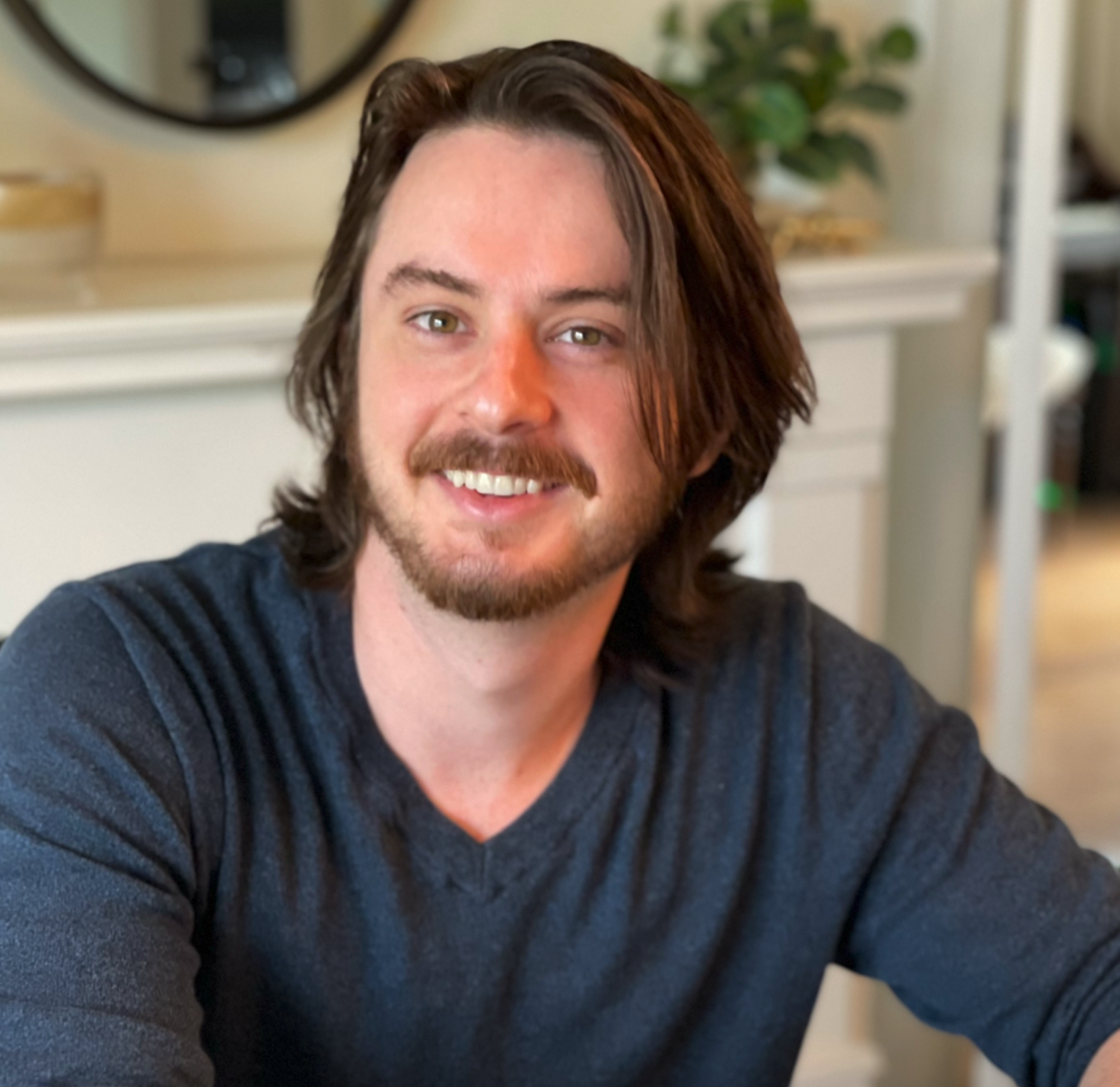
- Speaker
- Zayne Sprague
- Affiliation
- PhD Researcher, Courant Institute of Mathematical Sciences, New York University
- Research
- Reasoning in language models · with Greg Durrett (TAUR Lab)
- Partner
- CUNY Tech Prep
- Venue
- Amazon JFK27 (Hank) · 12 W 39th St, New York, NY 10018
Zayne Sprague is an NLP PhD student at NYU's Courant Institute, advised by Greg Durrett in the TAUR Lab. Zayne's research asks how to evaluate reasoning in language models and how to instill it. MuSR (ICLR 2024 spotlight) introduced a benchmark of multistep soft-reasoning problems, and “To CoT or not to CoT?” (ICLR 2025) showed that chain-of-thought helps mainly on math and symbolic tasks. The latest work, SkillFactory (ICLR 2026), uses self-distillation to teach models reusable cognitive behaviors, alongside contributions to OpenThoughts (ICLR 2026, oral), a set of open data recipes for reasoning models. Before the PhD, Zayne earned a BA and MSc in computer science at UT Austin and spent seven years in industry, most recently as a senior software engineer at CoPilot. This summer, Zayne started an internship at Google.
From Chain of Thought to Agent Swarms: A Brief Story on Reasoning in LLMs
Giving language models more time to think has produced substantial gains, but in targeted domains, and the benefits appear to remain uneven across tasks. This talk explores how models can use additional computation at inference time effectively, reviewing the progression from prompt based methods to multi-agent systems. We will begin with chain-of-thought prompting, asking a model to think before giving a final answer, presenting our work showing that chain-of-thought prompting has its strongest benefits concentrated in mathematics and symbolic reasoning. These domains also share a practical advantage: answers can often be checked automatically, providing feedback that can be used to train models through reinforcement learning. This leads us to SkillFactory, where we use a model's own successful and unsuccessful attempts to construct training examples that demonstrate checking answers and retrying. Combining supervised finetuning on these examples with reinforcement learning helps models develop these behaviors and generalize to harder problems. Finally, we will discuss recent work on agent swarms, exploring how reasoning can scale in parallel and what role verification can play in making that additional computation useful.
Sign up on Luma →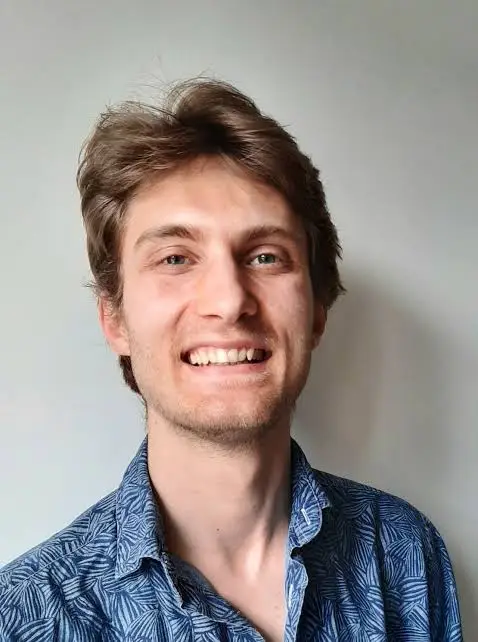
- Speaker
- Arthur Jacot
- Affiliation
- Assistant Professor, Courant Institute of Mathematical Sciences, New York University
- Research
- Mathematical theory of deep learning
- Partner
- Intuit
- Venue
- Intuit NYC · 51 Astor Pl, New York, NY 10003
Arthur Jacot is an Assistant Professor at NYU's Courant Institute of Mathematical Sciences. Arthur builds mathematical theory for how deep neural networks learn, and is best known for introducing the Neural Tangent Kernel during a PhD at EPFL with Clément Hongler. Recent work explains how DNNs act as a computational Occam's razor, finding simple, low-dimensional representations when trained with weight decay. This includes a proof that wide networks trained with weight decay exhibit neural collapse (ICLR 2025, oral) and an account of how DNNs break the curse of dimensionality through compositionality and symmetry learning (ICLR 2025). The newest paper frames deep learning as a convex paradigm of computation that minimizes circuit size with ResNets. Arthur's honors include the 2025 AMR Prize in Mathematics of Artificial Intelligence and the 2023 EPFL PhD Thesis Prize.
Deep Learning as a Convex Paradigm of Computation: Minimizing Circuit Size with ResNets
The general intelligence properties of deep neural networks (DNNs) could stem from their ability to implement a computational Occam's razor: searching over data-fitting programs to select the simplest one. However, minimizing algorithmic complexity is notoriously difficult; how could a local search algorithm such as gradient descent recover the optimal program? For example, there currently exists no algorithm for the Minimum Circuit Size Problem (MCSP) that improves upon brute-force search. I recently discovered a regime of computation, the Harder than Monte Carlo (HTMC) regime, where circuit size becomes convex, allowing the definition of a norm whose minimization is equivalent to the MCSP. We then propose a greedy algorithm that builds a mixture of circuits, searching first over simple circuits before larger ones. On the other hand, large DNNs appear to operate exactly in the HTMC regime, and there is evidence that they might be implementing a similar circuit search algorithm.
Sign up on Luma →
- Speaker
- Yair Schiff
- Affiliation
- PhD Candidate, Department of Computer Science, Cornell University
- Research
- Diffusion language models and generative modeling · with Volodymyr Kuleshov
- Venue
- Manhattan, NY · venue TBA
Yair Schiff is a computer science PhD candidate at Cornell University, based at Cornell Tech in New York and advised by Volodymyr Kuleshov, and is currently a PhD intern at NVIDIA. Yair works on generative modeling, optimal transport, and AI for science, and recent work centers on diffusion language models, which generate text by iteratively unmasking tokens rather than writing left to right. This includes MDLM (NeurIPS 2024), a simple masked diffusion recipe for language modeling, guidance mechanisms for discrete diffusion (ICLR 2025), remasking for inference-time scaling, and an encoder-decoder design for faster training and inference (both NeurIPS 2025). Other work includes Caduceus (ICML 2024), a bidirectional, equivariant DNA language model, and DySLIM (ICML 2024) for learning stable models of chaotic systems. Before the PhD, Yair was a developer on IBM Watson Machine Learning, contributing to IBM Research's Trusted AI work and the winning entry of the 2020 VizWiz Grand Challenge. Yair has also been a student researcher at Google and a research intern at InstaDeep, and holds an MS in computer science from NYU Courant and a BA in economics from the University of Pennsylvania.
Sign up on Luma →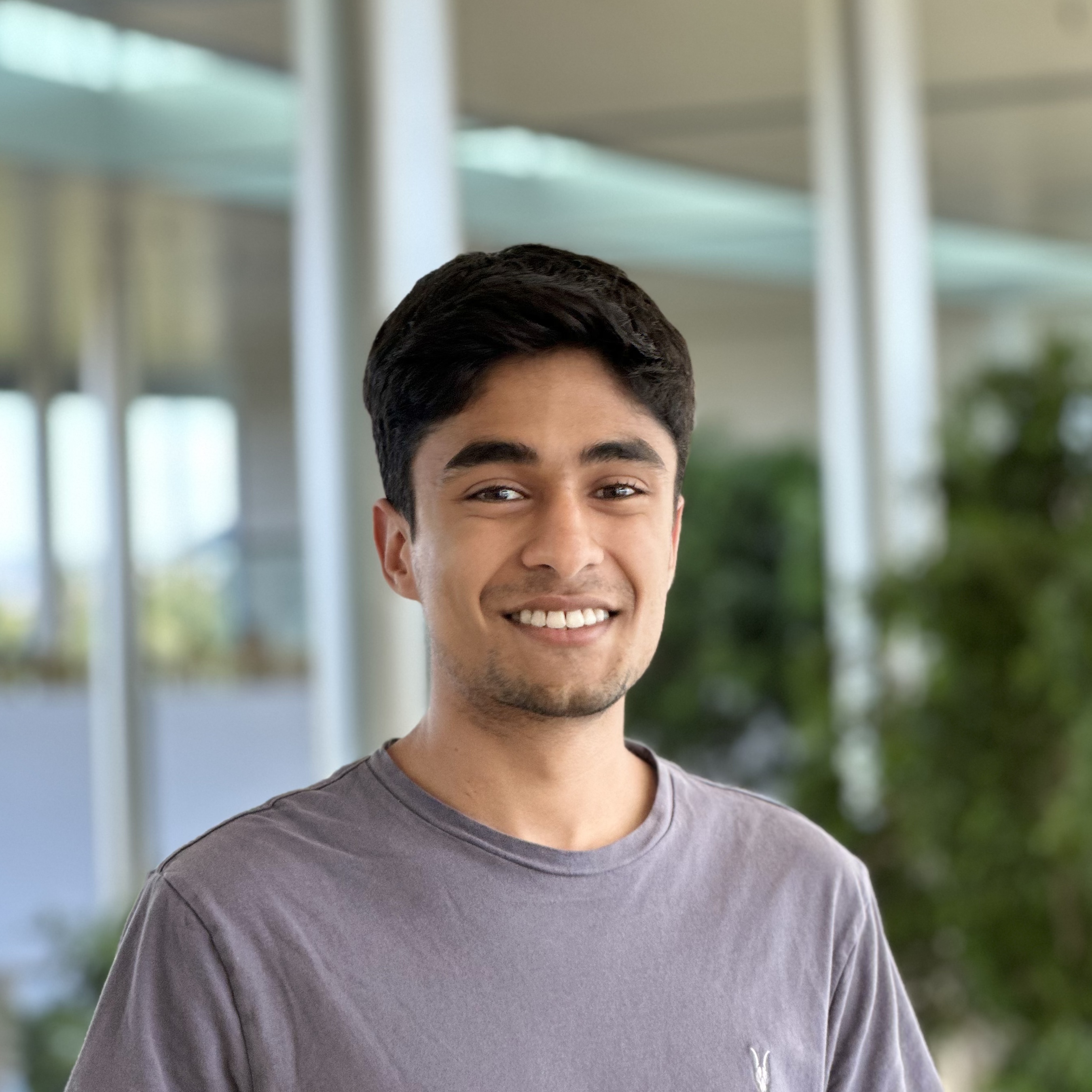
- Speaker
- Rohun Agrawal
- Affiliation
- PhD Student, Department of Computer Science, Columbia University
- Research
- World-model planning and large-scale memory retrieval
- Speaker
- Leon Li
- Affiliation
- PhD Student, Courant Institute of Mathematical Sciences, New York University
- Research
- Self-improving AI, continual learning and post-training
- Partner
- Intuit
- Venue
- Intuit NYC · 51 Astor Pl, New York, NY 10003
Rohun Agrawal is a computer science PhD student at Columbia University, co-advised by Micah Goldblum and Pavel Izmailov, and an NSF Graduate Research Fellow. Rohun's research pushes the temporal horizons of machine learning models: extending the future horizon through planning with world models, and the past horizon through efficient large-scale memory retrieval. Recent work closes the train–test gap in world models for gradient-based planning, and earlier work on visual agentic AI for spatial reasoning with a dynamic API appeared at CVPR 2025. Rohun earned a BS in applied and computational mathematics at Caltech, working with Georgia Gkioxari on visual reasoning and in Katie Bouman's lab on imaging inverse problems, and has interned at Apple on large video model training and at NASA's Jet Propulsion Laboratory.
Leon Li is a second-year computer science PhD student at NYU, advised by Pavel Izmailov and Micah Goldblum, and a researcher at Modal. Leon studies how to build AI systems that learn, improve themselves, and operate safely in the real world, with interests spanning automated AI research, continual learning, post-training science, and the alignment of superintelligence. Recent work includes “End-to-End Context Compression at Scale” (2026), PersonalLLM (ICLR 2025) for tailoring LLMs to individual preferences, and “LLM Generated Persona is a Promise with a Catch” (NeurIPS 2025). Before the PhD, Leon earned a BS and MS in computer science at Columbia, graduating magna cum laude.
Advances in Architectures for Long Context and Retrieval
Long-context inference is bottlenecked by the growing KV cache, in both memory and latency. However, existing KV cache compression methods either lose accuracy or must prefill the entire context before they can compress it. We introduce Latent Context Language Models (LCLMs), a family of encoder-decoder compressors trained end-to-end at scale that map long inputs to a short sequence of latent tokens before the decoder consumes them. LCLMs establish a new Pareto frontier in accuracy versus latency and memory over KV cache compression, while unlocking new capabilities such as agents that skim a compressed context and expand relevant segments on demand, and nearly lossless online compaction of the model’s own outputs during generation. For grounding language models in large document corpora, Retrieval-Augmented Generation (RAG) is the ubiquitous solution, yet it relies on a brittle lookup that can’t be trained end-to-end and slows generation by prefilling long contexts. We introduce Retrieval Layers, learnable sparse cross-attention layers that retrieve external text in latent space and Pareto-dominate RAG on accuracy versus latency.
Sign up on Luma →
- Speaker
- Xinhao Liu
- Affiliation
- PhD Candidate, Tandon School of Engineering, New York University
- Research
- Embodied AI and universal navigation · with Chen Feng (AI4CE Lab)
- Venue
- Manhattan, NY · venue TBA
Xinhao Liu is a computer science PhD candidate at NYU, advised by Chen Feng in the AI4CE Lab, and is currently at Amazon FAR (Frontier AI and Robotics). Xinhao's research aims at universal navigation: embodied agents that can go anywhere humans can go, drawing on world modeling, video understanding, and digital twins. CityWalker (CVPR 2025) learns urban navigation from web-scale walking videos, and Wanderland (CVPR 2026, highlight) builds geometrically grounded simulation for open-world embodied AI. Earlier work spans LiDAR mapping and 3D scene understanding, including DeepMapping2 (CVPR 2023) for self-supervised large-scale map optimization and Occ4cast and SSCBench (both IROS 2024) for occupancy forecasting and semantic scene completion. Xinhao interned at Waymo in summer 2025 and earned a BSc in honors mathematics and data science from NYU and NYU Shanghai.
Grounding Over Appearance: Scaling Embodied AI with the World's Own Geometry
Embodied AI increasingly bets on scale: larger models, more pixels, more text. Yet the failures that matter most for an agent acting in the world are physical: it trains in simulators that look right but are geometrically wrong, or walks past a goal it has already found. In this talk, I will show that what embodied learning needs to scale is not appearance but grounding, and that the world's own geometry, recoverable from observation, is what makes this possible. I will conclude by discussing how such grounding might be learned directly from real-world video.
What this is
Activities, functions and scope of the Guild
- Discord(Upcoming)
- A shared space to trade knowledge, papers, and questions. Opens to members once the colloquia are running regularly.
- Monthly colloquia
- Researchers from local institutions and labs present their work; members meet, network, and exchange ideas. Open to attend, limited only by room capacity.
- Industry & events
- Sharing sessions with industry, hackathons, guild trips to conferences, and joint workshops.
- Research Party
- NY-MLR is also a place to find collaborators for a research project by forming a Research Party. More details later.
Culture & values
Our core guiding principles
Sincere interest is enough to belong.
Anyone genuinely curious about the field and its ideas has a place here.
Collaboration comes first.
Courtesy and respect are the baseline. Treat others as you'd want to be treated.
We aim high.
Welcoming as it is, the guild means to do work that matters.
The bar is there to lift, not to shut people out.
Standards exist to push everyone toward better work, not to gatekeep for its own sake.
Give back what you were given.
Help others grow, and yield when it's called for. That's what a community is for.
“If you don't work on important problems, it's not likely that you'll do important work.”— Richard Hamming